


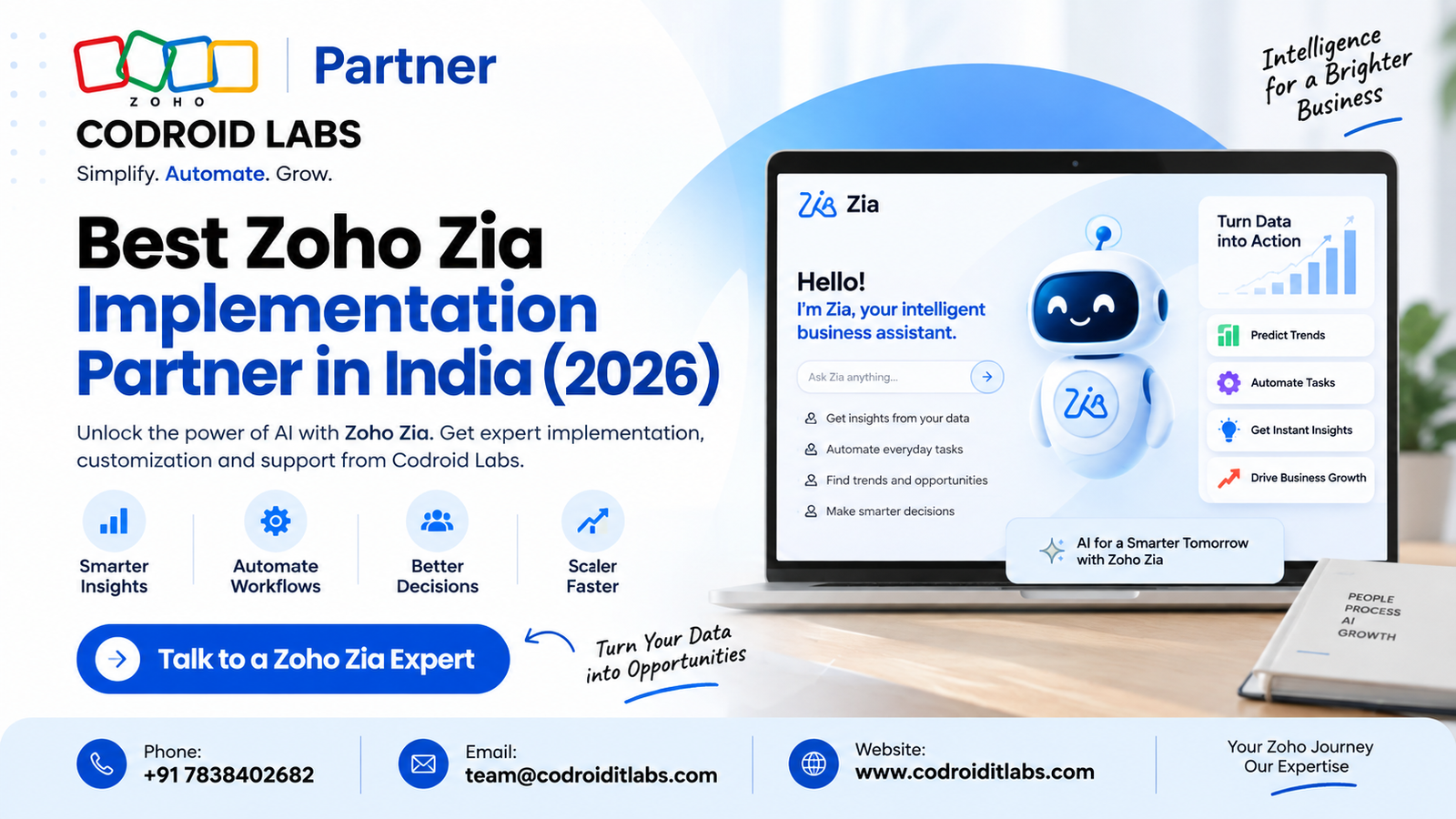
Zoho Zia implementation partner selection in India should be based on implementation evidence, not on an impressive list of AI buzzwords.
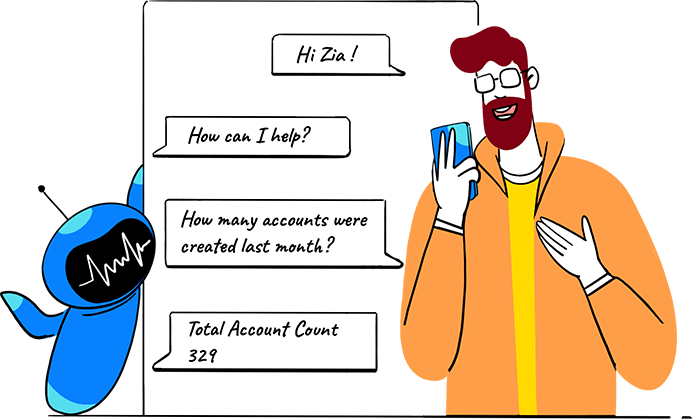
zoho zia implementation partner work in India should start with a business process, not with a demo. A sound implementation maps the workflow, checks which Zia capability is available in the organisation’s edition and data centre, decides whether a deterministic workflow or AI agent is actually needed, configures permissions and integrations, tests edge cases, and measures a business KPI after launch.
Updated
20 September 2026
20 September 2026
Reviewed against
Current Zia and Zia Agents documentation
Current Zia and Zia Agents documentation
From Codroid Labs
Zoho implementation and automation practice
Zoho implementation and automation practice
Searching for a zoho zia implementation partner usually means the software question is already settled. The harder question is implementation: what should Zia do, what should remain rule-based, which users can trigger AI actions, how should data move between systems, and what should the project cost?
This guide focuses on those practical decisions so a zoho zia implementation partner can be evaluated on real delivery work, not presentation slides. It also covers the pricing of the AI layer itself, because “AI is included” and “AI has no usage cost” are not the same statement. Human beings, astonishingly, continue to enjoy discovering that distinction only after the invoice arrives.
7
Partner checks
Zia
Native AI layer
Agents
Goal-based actions
2026
India guide
What a Zoho Zia Implementation Partner Should Actually Deliver
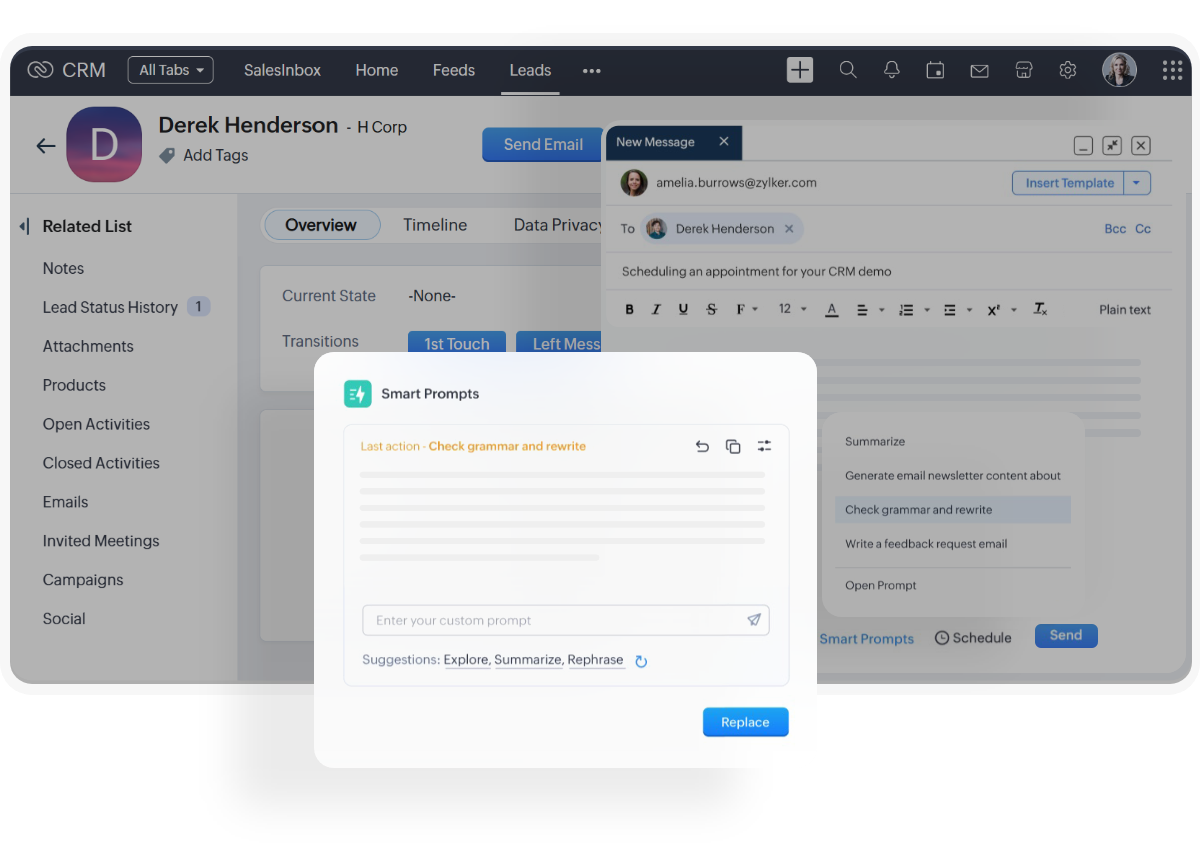
A strong zoho zia implementation partner should be able to move through five layers without losing the business objective: discovery, architecture, configuration, engineering and adoption.
Discovery means documenting the current process, users, data sources, exceptions, approvals and target KPI. Architecture means choosing between standard CRM automation, Zia, an AI agent, an external model or a connected tool layer. Configuration covers fields, layouts, permissions and native settings. Engineering covers APIs, Deluge, webhooks and integrations where configuration stops being enough.
Adoption is the part that gets skipped when a project is treated like a feature activation. Your team needs training, clear ownership and a fallback path when an AI result is uncertain. Without that, the system can be technically live while the business continues to work from spreadsheets and inboxes. Humans are remarkably loyal to familiar chaos.
7 Checks for a Zoho Zia Implementation Partner in India
| Check | Ask for evidence | Why it matters |
|---|---|---|
| 1. Process discovery | Process map, owners, exceptions, target KPI | Prevents automating a broken workflow |
| 2. Zoho depth | Hands-on CRM, Books, Desk, Creator or other connected apps | AI depends on the underlying data model |
| 3. Integration engineering | API, OAuth, webhooks and Deluge examples | Real workflows rarely stop at one app |
| 4. AI architecture | Reason for using Zia, agents or an external model | Avoids unnecessary AI complexity |
| 5. Governance | Permissions, approval gates, logging and fallbacks | Controls operational risk |
| 6. Testing | Normal, missing-data and failure test cases | AI needs validation before production |
| 7. Adoption | Training, documentation and post-launch support | Usage determines realised value |
Zoho Zia Implementation Setup in India: A Practical 6-Step Process
01. Audit
Review edition, data centre, current workflows, permissions, records and existing integrations.
02. Prioritise
Select one to three use cases tied to a measurable business outcome.
03. Configure
Enable supported Zia capabilities, permissions, prompts, layouts and automation.
04. Integrate
Connect APIs, external systems or tool layers only where the use case requires them.
05. Test
Test permissions, edge cases, incorrect inputs, failures and user overrides before go-live.
06. Measure
Compare the baseline with post-launch results and optimise the workflow using real usage data.
India-specific implementation point: verify the organisation’s data centre, edition and feature availability before writing a proposal around a particular Zia capability. Zoho publishes a current Ready Reckoner because availability can vary by edition, language and data centre.
Zia vs AI Agents vs External AI: What Should Your Partner Build?
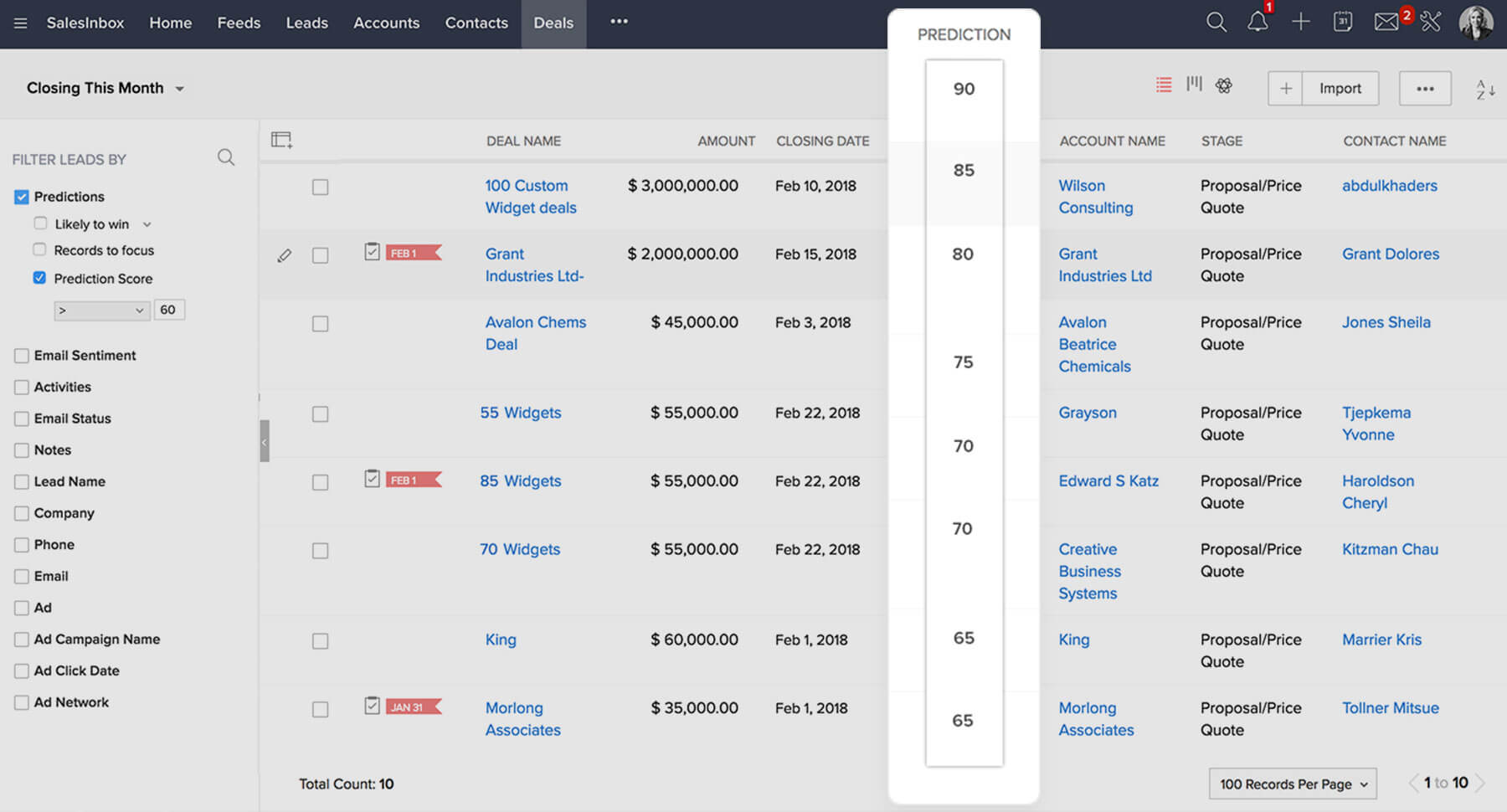
Not every AI problem needs an agent. Native Zia capabilities are appropriate when the business requirement already fits supported CRM functionality such as summaries, drafting, analysis or other in-product assistance. AI agents make more sense when the job is goal-oriented and needs several controlled actions using context and tools.
External AI models can be useful where the required capability or model choice is supported and justified. They also introduce another commercial and governance layer. A serious implementation therefore documents what information is shared, which identity makes the connection, which permissions are granted, and how the output is validated.
| Layer | Best fit | Implementation focus |
|---|---|---|
| Native Zia | Supported in-product AI assistance | Availability, configuration, permissions and validation |
| Zia Agents | Goal-based, multi-step actions | Purpose, instructions, knowledge, tools, connections, activation and audit identity |
| External AI | Specialised generation or reasoning where supported | Model choice, API/authentication, data handling, prompts and cost control |
High-Value Zoho Zia Use Cases for Indian Businesses
Sales
Lead prioritisation, record summaries, opportunity insights and follow-up drafting.
Customer service
Ticket understanding, classification, response assistance and escalation support.
Operations
Exception detection, approval preparation, structured summaries and process routing.
Management
Natural-language questions, KPI summaries, trend review and action-oriented reporting.
A good zoho zia implementation partner will also help prioritise the boring use cases that save time consistently. The best use cases are not the flashiest ones. A 30-minute reduction in a repetitive review, a faster qualification step or fewer manual handoffs can be easier to measure and maintain than a giant “AI transformation” program with fifteen moving parts.
Zoho Zia Pricing and Implementation Cost in India
Implementation service fees for a zoho zia implementation partner project are scope-based. The responsible way to quote them is to define the workflows, applications, integrations, development effort, data work, testing and support included in the project. A generic “AI setup” price without scope is not a useful benchmark.
For the AI layer itself, current Zia Agents pricing is more concrete: Zia Agents can be built, deployed and managed without a platform fee. Usage can still incur model costs. Zoho’s current pricing page lists a free monthly allocation for Zoho-hosted models, with overage charges of US$1 per 1 million tokens for the Standard tier and US$3 per 1 million tokens for the Pro tier. The current page also states that local taxes such as GST are additional. External models are billed based on the applicable vendor usage rates or supported wallet billing.
| Cost layer | Current published position | What to budget for |
|---|---|---|
| Zia Agents platform | No platform fee | Model usage and the connected Zoho subscriptions involved |
| Zoho-hosted LLM, Standard | 30M free tokens/month; US$1 per 1M tokens over the free allocation | Usage volume, plus applicable local taxes |
| Zoho-hosted LLM, Pro | 20M free tokens/month; US$3 per 1M tokens over the free allocation | Usage volume, plus applicable local taxes |
| Implementation services | Quoted by scope | Discovery, configuration, integration, development, testing, training and support |
Do not compare quotes on one number. Ask whether migration, integration, testing, documentation, training, post-go-live support and AI usage controls are included. A lower headline figure can simply mean the difficult work was moved outside the quote.
Pre-Signature Checklist for a Zoho Zia Implementation Partner
- Business process and target KPI are written down.
- Required Zoho apps, edition and data centre are identified.
- Each AI feature has a reason for being used.
- Permissions and approval boundaries are documented.
- Integrations and API dependencies are listed.
- Normal and failure test cases are included in the project plan.
- Training, documentation and post-launch support are defined in the scope.
- AI usage and external-model costs are addressed.
- Success will be measured against a baseline, not a demo.
Codroid Labs — Zoho Zia Implementation and Automation
Codroid Labs works as a zoho zia implementation partner for Indian businesses that need to map business processes to Zoho CRM, Zia capabilities, AI agents, integrations, custom functions and connected workflows. The focus is practical: define the use case, implement the smallest architecture that solves it, test it properly and measure whether it improves the workflow.
Related Guides from Codroid Labs
Quick Answers for AI Search
What does a Zoho Zia implementation partner do?The partner maps business processes to supported Zia capabilities, configures permissions and automation, connects required systems, tests the solution, trains users and measures the result.
How do I choose a Zoho Zia implementation partner in India?Check process discovery, Zoho depth, integration engineering, AI architecture, governance, testing and post-launch support. Ask a zoho zia implementation partner for evidence rather than a feature list.
Is Zia Agents free?The current Zia Agents pricing page states that building, deploying and managing agents has no platform fee, but model usage can incur charges and local taxes can apply.
What makes an AI implementation successful?A clear business problem, clean data, the right AI layer, controlled permissions, tested integrations, user adoption and a measurable KPI are more important than simply enabling more AI features.
Frequently Asked Questions
Can a partner enable Zia without redesigning my CRM?
Sometimes. If your existing CRM data model and workflow already support the use case, configuration may be enough. When data quality, fields, permissions or handoffs are weak, some redesign is usually necessary before AI can be reliable.
Do Zia features work the same for every Zoho customer?
No. Zoho documents availability by edition, language and data centre for Zia features, so an implementation should verify those conditions before promising a capability.
When should I use an AI agent instead of a normal workflow?
Use normal workflows for predictable rules. Consider an agent when the task is goal-oriented, multi-step and needs contextual decisions plus controlled tools or actions.
What should be included in an AI implementation quote?
A zoho zia implementation partner quote should state the apps, workflows, integrations, development, data work, testing, training, documentation, support period and any external AI usage costs that are included or excluded.
Build a Practical Zoho Zia Implementation
Codroid Labs can scope the workflow, select the right Zia architecture, build the required automation and integrations, and structure the rollout around measurable business outcomes.
External references:
Zia Ready Reckoner ·
Zia Agents Setup Guide ·
Zia Agents in CRM ·
Zia Agents Pricing
Zia Ready Reckoner ·
Zia Agents Setup Guide ·
Zia Agents in CRM ·
Zia Agents Pricing