


Introduction: The Ultimate HRMS Showdown
In today’s fast-paced business environment, choosing the right Human Resources Management System (HRMS) is not just an administrative decision—it’s a strategic one. The platform you select order everything from employee experience and compliance to the efficiency of your HR team. When it comes to modern, scalable HR solutions, two names frequently top the list for businesses in India and globally: Zoho People vs. Keka.
As a certified Zoho Partner, we have deep, hands-on experience with both systems and recognize the strengths and weaknesses of each. This comprehensive guide will cut through the marketing noise, offering a feature-by-feature comparison of Zoho People vs. Keka to help your HR team make a confident, data-driven choice. We’re going beyond the basics to look at the user experience, scalability, and specific features that define an industry-leading HRMS.
Why This Comparison Matters: The best HRMS simplifies compliance, automates mundane tasks, and crucially, enhances employee engagement. Don’t settle for a system that just ‘does the job.’ Let’s find the platform that empowers your people.
Table of Contents
1. Core Philosophy & Target Audience
Before diving into features, understanding the DNA of each product is essential.
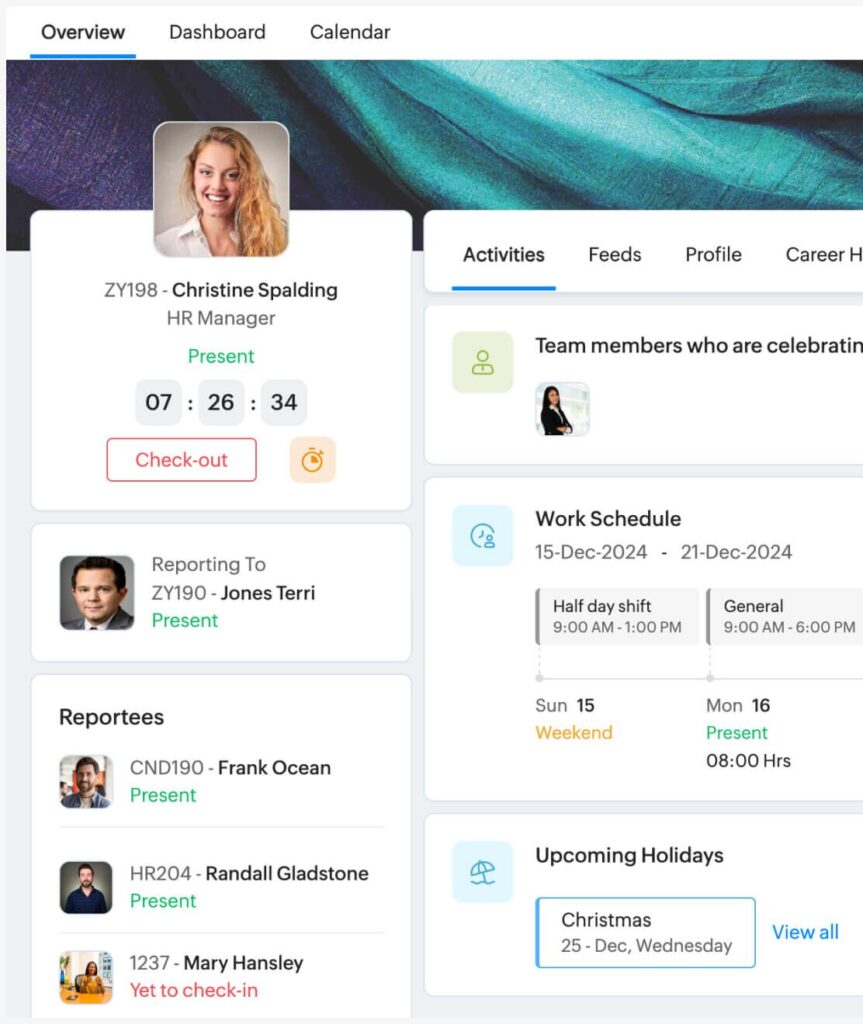
Zoho People: The Ecosystem Advantage
Zoho People is part of the massive Zoho One suite, an operating system for business. Its core strength lies in its seamless integration with over 50 other Zoho applications—CRM, Finance (Zoho Books), Projects, and more.
- Target Audience: Businesses that prioritize an all-in-one ecosystem. Companies already using or planning to use other Zoho products will find the inherent, deep integration of Zoho People to be a significant advantage. It’s built for global scale and ultimate feature versatility.
- Best For: Growing SMBs to large enterprises that value customization and integrating HR data with Finance, Sales, and IT.
Keka: The Employee Experience Specialist
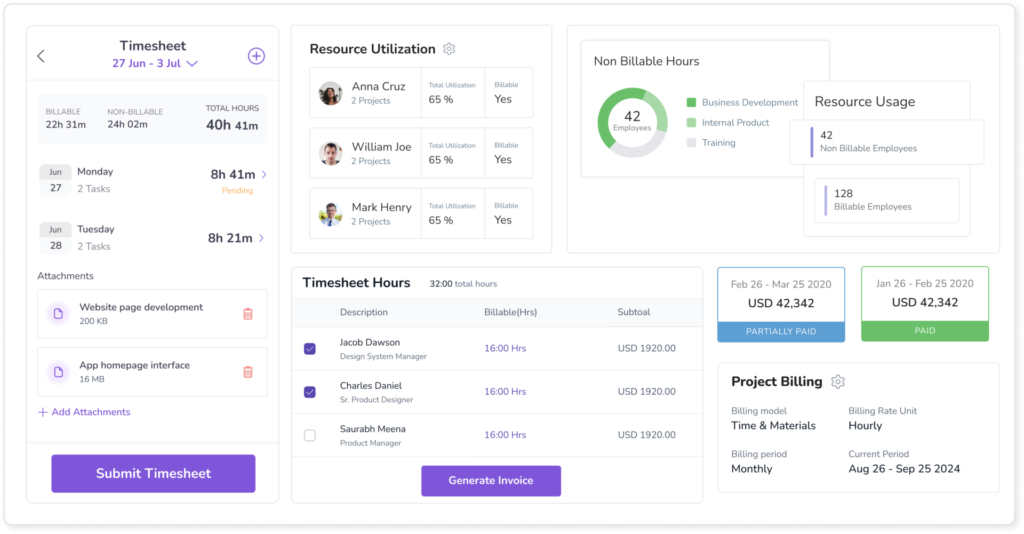
Keka was built with a primary focus on the modern employee experience and India-centric payroll and compliance. The platform is renowned for its highly polished, intuitive UI and a strong emphasis on user adoption.
- Target Audience: Mid-sized businesses and enterprises, especially those with complex, strict Indian statutory compliance needs. Companies that want a platform that employees genuinely enjoy using often gravitate toward Keka.
- Best For: Mid-market companies in India for whom the simplicity of payroll compliance and an exceptional employee self-service portal is the highest priority.
2. Feature Deep Dive: Zoho People vs. Keka
This is where the rubber meets the road. HR teams need functionality that doesn’t just manage but automates and optimizes.
2.1. Attendance & Leave Management (A&L)
| Feature | Zoho People | Keka | Strategic Insight |
|---|---|---|---|
| Tracking Flexibility | Highly flexible. Supports geo-fencing, IP restrictions, biometrics, and mobile check-in. Strong location-based security. | Excellent. Offers precise clock-in/out, biometric, and geo-fenced attendance. Strong for field employees. | Zoho People offers deeper, more granular rules for complex/global policies. Keka is praised for its simplicity and ease-of-use on the mobile app. |
| Leave Management | Robust. Highly customizable leave types, accrual rules, and carry-forward settings. Integrated with calendar apps. | Industry-leading simplicity. Extremely simple application/approval process. Very strong visibility on leave balances and clear policy enforcement. | Both are excellent. Keka often wins on pure employee experience; Zoho People wins on policy customization depth. |
| Shift Management | Advanced. Excellent for complex shift scheduling, rotating shifts, and shift swaps across multiple locations/time zones. | Strong, but its primary focus is on simplifying fixed and routine rotational shifts. | Zoho People is better for businesses with fluid, 24/7 or international workforces. |
2.2. Payroll Processing & Compliance
This is often the most critical differentiator, especially in the Indian market.
- Keka: Often cited as the gold standard for Indian payroll. It boasts automated, end-to-end statutory compliance for TDS, PF, ESI, and Professional Tax, offering high confidence in accuracy and timeliness. Its payroll module is deeply integrated into the core platform, making it a single-source-of-truth. Keka’s self-service portal for tax declarations and investment proof submission is highly rated by users.
- Zoho People (via Zoho Payroll): While Zoho People handles the Core HR data, the heavy lifting of compliance is done by Zoho Payroll. This combination offers a powerful, flexible payroll module that supports multi-national compliance and is excellent for global companies. For India-only operations, while perfectly capable and affordable (free for up to 10 employees), Keka’s native, all-in-one focus on Indian regulations often provides a simpler, less-configuration-heavy experience for mid-sized firms.
Key Takeaway: If your primary payroll headache is India-centric compliance and simplicity, Keka provides a highly specialized solution. If your business has a global footprint or requires unified HR data across borders and apps, the flexibility of Zoho People vs. Keka makes Zoho the better choice.
2.3. Performance Management & Goal Setting (PMS)
This is a strategic area for growth-focused HR teams.
| Area | Zoho People | Keka |
|---|---|---|
| Review Types | Supports 360-degree feedback, goal-based, competency-based, and KRA-based reviews. | Supports 360-degree, OKR-focused (Objectives and Key Results), KRA-based, and custom forms. |
| Goal Management | Integrated with Zoho Projects/Connect. Excellent for cascading organizational goals down to individuals (cascading OKRs). | Strong OKR focus with a clear, visual dashboard. Empowers employees to track progress daily. Often considered easier for the average employee to use. |
| Continuous Feedback | Robust features for continuous check-ins, one-on-ones, and informal feedback logging. Deeply integrated with the Zoho ecosystem. | Exceptional—its focus on employee experience makes logging and requesting feedback very easy and highly adopted by users. |
2.4. Recruitment & Onboarding
- Zoho People: Integrates directly with Zoho Recruit, a dedicated enterprise-grade ATS (Applicant Tracking System). This provides a comprehensive recruiting module—from sourcing to interview management—that is hard to beat. The onboarding process is highly workflow-driven and can be triggered across different Zoho apps.
- Keka: Offers a capable, built-in ATS that is perfectly sufficient for most mid-market hiring needs. Its onboarding module is a particular strength, known for its smooth, paperless, and engaging digital welcome kit for new hires. Keka’s employee-centric design shines here.
3. The Critical Factor: User Experience (UX) & Mobile App
In the battle of Zoho People vs. Keka, user adoption is paramount. If employees don’t use it, the ROI is zero.
| UX Metric | Zoho People | Keka |
|---|---|---|
| User Interface (UI) | Highly functional, but can feel slightly complex or cluttered due to the sheer number of features and customization options. | Modern, Clean, and Highly Intuitive. Designed to be immediately accessible to all employees. |
| Ease of Administration | Very powerful, but requires more setup and configuration time due to the high level of customization available. | Easier to administer for core HR functions and payroll. Built-in compliance simplifies admin tasks significantly. |
| Mobile App | Excellent features for clock-in/out, leave requests, and payslip viewing. Full-featured but sometimes criticized for a steeper learning curve. | Exceptional. Frequently rated higher by users for its speed, simplicity, and ease of use for ESS (Employee Self-Service) tasks. |
4. The Decisive Differentiator: Integration & Ecosystem
For strategic HR, the ability to connect data with other business units is key. This is where the choice between Zoho People vs. Keka becomes most pronounced.
- Zoho People Ecosystem Power: This is Zoho People’s unbeatable advantage. Its native, deep integration with Zoho One tools means HR data flows automatically into your CRM (Zoho CRM), Finance (Zoho Books/Invoice), Projects (Zoho Projects), and IT (Zoho Desk/Vault). For a company aiming for an entire unified, single-vendor operating system, this is a non-negotiable factor that simplifies IT, vendor management, and data reporting.
- Keka’s Integration: Keka integrates well with necessary third-party tools (like Tally, QuickBooks, and specific biometric devices) essential for payroll and accounting. It offers a capable API for custom connections. However, it does not offer the same holistic, single-vendor ecosystem breadth as Zoho. The focus is on being the best HRMS, not a full business suite.
5. Pricing & ROI: Cost of Zoho People vs. Keka
When comparing Zoho People vs. Keka, the pricing models reflect their core philosophies.
Zoho People Pricing: The Modular and Ecosystem Approach
Zoho People is priced based on features (Essential HR, Professional, Premium, etc.) and the number of employees.
- Pro (ROI): If you are already a Zoho One customer, the overall cost of acquiring Zoho People is significantly lower, offering massive ROI due to the ecosystem benefit. The entry-level price is extremely attractive. Zoho Payroll is also free for up to 10 employees.
- Con: Advanced features and the necessary integrations (like Zoho Payroll/Recruit) often require combining modules, which can make the total cost creep up for a full-suite solution.
Keka Pricing: The Unified, Employee-Centric Approach
Keka often structures its pricing around its core modules (Foundation, Dream, Genius). It tends to be highly transparent and includes key features like payroll/compliance natively within its structure.
- Pro (ROI): Very straightforward, “what you see is what you get” pricing. Often includes highly specialized Indian compliance features standard. High employee adoption due to the excellent UX boosts engagement ROI.
- Con: Can be a higher initial per-employee cost compared to Zoho People’s entry-level plans, especially for smaller teams who don’t need the full feature set.
6. The Verdict: Which HRMS is Right for Your Business?
Choosing between Zoho People vs. Keka isn’t about finding the “better” software; it’s about finding the better fit for your specific HR strategy and business structure. Both are powerful, modern, and highly-rated solutions.
Choose Zoho People If:
- ✅ You are (or plan to be) a Zoho One customer. The cost and efficiency benefits of the unified ecosystem are too great to ignore.
- ✅ Your business operates globally or requires a highly customizable, multi-country HR setup and complex workflows.
- ✅ You require a highly advanced, integrated ATS (via Zoho Recruit) and the ability to build custom applications on top of your HR data.
- ✅ You prioritize flexibility and deep configuration over out-of-the-box simplicity.
Choose Keka If:
- ✅ Your primary challenge is Indian statutory payroll and compliance. Keka’s compliance engine is a leading, specialized product in this space.
- ✅ You prioritize employee adoption and User Experience (UX). Keka’s UI is frequently praised for its modern design and ease of use, leading to higher self-service adoption.
- ✅ You are a mid-market company whose HR needs are complex but do not require the multi-app ecosystem of Zoho One.
- ✅ You want continuous performance management and feedback to be seamlessly integrated into the daily flow of work.
Conclusion
The comparison between Zoho People vs. Keka highlights a choice between a powerful, deeply integrated ecosystem player (Zoho People) and a highly specialized, employee-centric specialist (Keka).
As a certified Zoho Partner, we believe that the strategic advantage of Zoho People’s unified business platform offers unparalleled long-term scalability and ROI for companies looking to unify all their business functions—from sales and marketing to finance and HR—under one login.
Ultimately, both are top-tier HRMS solutions. Your next step should be to run a live demo of your preferred platform with your HR team’s key use cases in mind.
Ready to Get Started on Zoho?
Let’s build your business the smart way — with Zoho and Codroid Labs by your side.
📅 Book your free consultation now
Frequently Asked Questions
Q1: Is Zoho People or Keka better for India-centric statutory compliance and payroll?
Keka is generally considered the gold standard for Indian payroll and statutory compliance. Its system is natively built and highly specialized to handle complex Indian requirements like TDS, PF, and ESI with high automation and accuracy. Zoho People, while fully capable (via integration with Zoho Payroll), is an ecosystem player built for global flexibility, meaning Keka often offers a simpler, more direct solution for India-only businesses.
Q2: Which platform has the better User Experience (UX) for employees?
Keka is widely praised for its superior, clean, and modern Employee Self-Service (ESS) experience and mobile app. It was designed with an employee-first philosophy, resulting in higher user adoption rates for tasks like applying for leave or clocking in/out. While Zoho People‘s mobile app is full-featured, its comprehensive nature can sometimes make the UI feel slightly more complex.
Q3: How does the Zoho ecosystem factor into the decision between Zoho People vs. Keka?
The Zoho ecosystem is the primary differentiator for Zoho People. If your organization uses (or plans to use) other Zoho products—like Zoho CRM, Zoho Books, or Zoho Projects—choosing Zoho People offers unmatched, seamless, native integration. This unification creates a single source of truth for HR, Sales, and Finance data, providing superior efficiency and ROI that Keka cannot replicate with its third-party integrations alone.
Q4: Which system is more customizable?
Zoho People is generally more customizable, especially at the workflow and platform level. Because it is built on the Zoho Creator platform, HR teams can design highly specific forms, workflows, and process automations that integrate data across the entire Zoho suite. Keka offers excellent customization for policies and reporting but does not provide the same depth of platform-level customization.